:quality(85):upscale()/2025/04/28/431/n/37141241/51d74c30680f48b08c8be8.29581151_.jpg "Women’s Sports Gear Isn’t Fit For Purpose")
I’ve recently become the millennial cliché; I’ve taken up running in my late twenties, and no one’s more surprised than me. Any interest I had in sport fizzled out at school. A few comments about how I looked running or hitting a cricket ball were enough to knock my confidence and put me off altogether. But in my early twenties, I slowly found my way back into fitness through the gym.
Running wasn’t part of the plan, but as 30 approaches, I’ve felt an urgency to face things I fear. And like so many thirty-somethings eyeing a marathon, I too have fallen in love with running.
That said, I learnt the hard way that you can’t just throw on any old trainers and go. I discovered I had plantar fasciitis, a condition that causes pain on the bottom of the foot, triggered by being flat-footed and wearing shoes that didn’t support my arch or heel properly. Finding the right pair has been both expensive and exhausting. Between foot exercises and hours of research, I’ve stumbled into the complex world of women’s footwear, or lack thereof.
The industry [has a] “shrink it and pink it” approach, where the men’s kit is simply scaled down for women with little thought for fit.
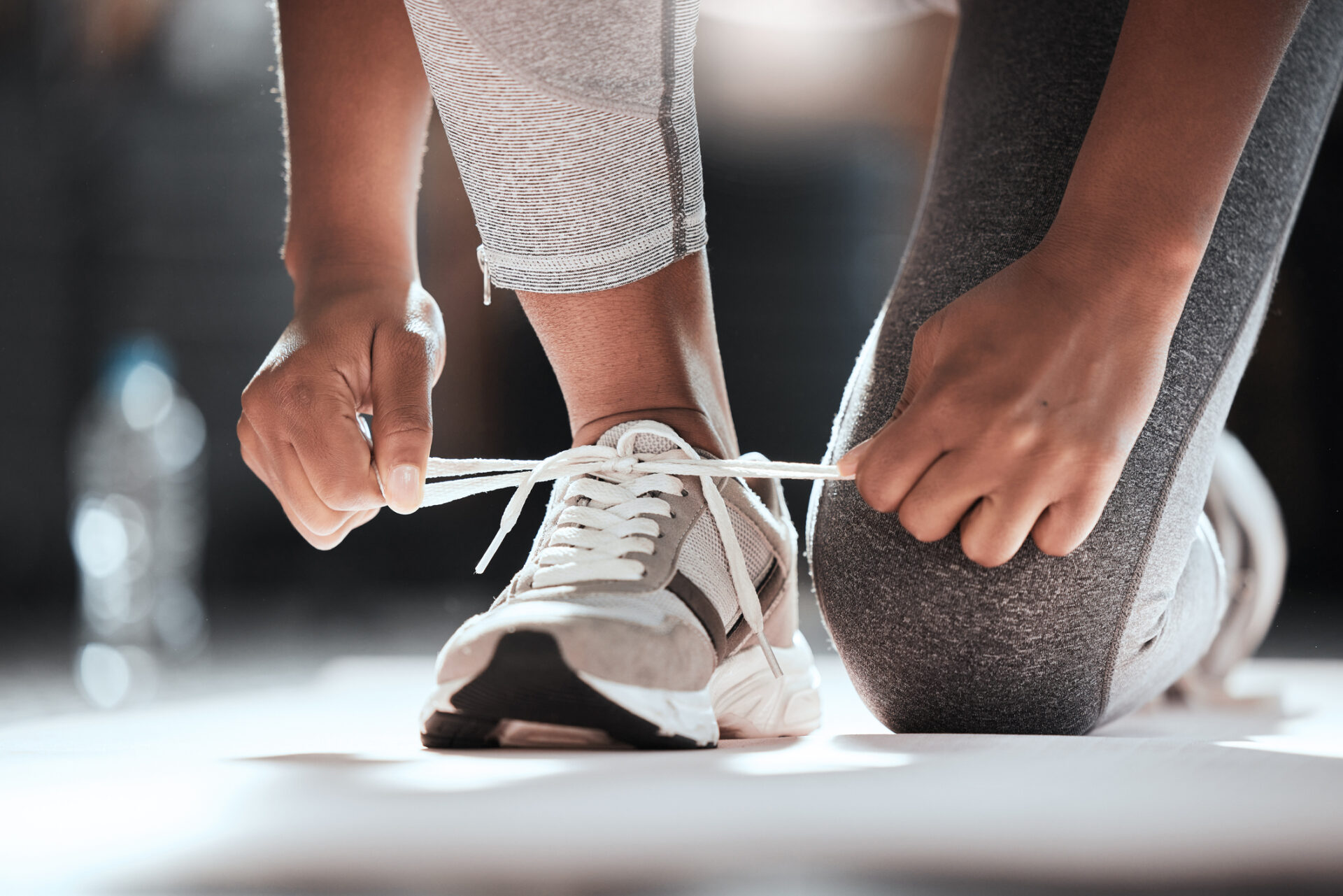
Across sport, women are saying the same thing: sports clothing and equipment still isn’t being designed with us in mind. Footwear is a huge part of it. In 2023, 80% of female players at top European clubs reported regular discomfort wearing football boots, according to a study by the European Club Association. Men’s feet are shaped differently, with higher arches, narrower heels, and lower overall volume and, unsurprisingly, boots are built around a man’s foot and women are expected to play in them.
This issue goes beyond footwear, too. LUCA, a British cycling apparel brand founded by Luca Kahn, was created in response to what she describes as the industry’s “shrink it and pink it” approach, where the men’s kit is simply scaled down for women with little thought for fit. Many cycling apparel designs still use unisex pads in bib shorts or make only minor tweaks for women, often resulting in discomfort and performance issues like saddle sores.
:upscale()/2025/04/28/425/n/37141241/tmp_4AgE8N_a7795f2036d8caa3_Lanzy_2025_Credit_Ryan_Sosna_Bowd-58.jpg)
Ill-fitting gear that overlooks the physical differences between women and men is still far too common. It’s affecting how we feel, train, and perform. Allyson Felix, one of the most decorated track and field athlete in US history, knows first-hand the impact of wearing gear not designed for women. “For years, I was competing at the highest level in footwear that simply wasn’t made for me… our feet are shaped differently, our bodies move differently, and when your career depends on milliseconds, that kind of insight matters,” she tells PS. “I’ve had injuries and discomfort that I now realise could have been avoided if the equipment had been made with women in mind from the start.”
Felix is a leading voice for equity in sport, using her entrepreneurial journey to redefine what support for women in sport can look like. Drawing from her own experiences, she founded Saysh, a footwear performance brand designed specifically for women, creating trainers that cater to women’s needs. As she says, “real progress comes when we also practically challenge the systems that weren’t built with us in mind.”
“I’ve had injuries and discomfort that I now realise could have been avoided if the equipment had been made with women in mind from the start.”
The problem isn’t just how sports clothing fits, it’s what it prioritises. While athletes like Felix are challenging systems built around men, others are speaking out about how sportswear continues to value aesthetics over performance. Jessica Watson, a 29-year-old marathon runner and founder of GLORIAH, a feminist wellness brand, went viral on TikTok for calling out the stomach-sucking, bum-sculpting epidemic in women’s sportswear. “I’m 5’3 and petite, it really shouldn’t be this hard to find kit that doesn’t cut off my circulation. So many shorts and leggings are designed for aesthetics first – making your bum look rounder, waist look smaller, boobs pop. That’s not what I need or want when I’m training at a serious level,” she says.
Men’s gear prioritises function where women’s gear often doesn’t, affecting how Watson once felt about her body during running. “When I trained to look a certain way, I felt constant pressure and lost the joy in running,” she shares. “Now I train for performance and love it, but I’m still searching for sportswear that matches that mindset.”
She attributes much of the issue to the wider wellness and beauty industry which, she believes, plays on women’s insecurities, disguising it as empowerment. “Marketing tells us we’re doing it for ourselves, but a lot of the visual standards are still tied to the male gaze.” It’s then no wonder that Women in Sport research has found that 64% of girls quit sport by the age of 16 or 17.
Real change in women’s sportswear is often being driven by female athletes turned entrepreneurs themselves, and while that’s a promising sign, it can’t stay small-scale. Fortunately, we’re seeing signs of this. This year, Guinness has teamed up with IDA Sports to create the first-ever soft-ground rugby boots designed specifically for women. These boots made their debut at the 2025 Women’s Six Nations Rugby, with players such as Megan Jones wearing them for the first time.
:upscale()/2025/04/28/426/n/37141241/tmp_NlSXwR_c4c3cf9264a3e728_IDA_Rugby_Boots.jpg)
For Megan, comfort is key, especially when trying to step or run around players. “Our feet are our biggest asset in terms of the game,” she says. Scotland’s Elis Jones has faced similar challenges since starting to compete at 16. “I get pressure sores, blood blisters, dead toenails – you name it,” she says. With size 5 feet, she was stuck between men’s boots that were too big and junior sizes that were too narrow and lacked proper studs. “It’s always been through ill-fitting boots,” she explains.
When Elis was finally handed boots made specifically for women, the emotional impact was huge. Being part of the first wave of women testing gear made with their bodies in mind felt special – and long overdue. “You should be able to go to any shop or online and easily find stuff that fits. Stuff that’s actually made for you. That’s what I’m hoping comes next.”
“You should be able to go to any shop or online and easily find stuff that fits. Stuff that’s actually made for you. That’s what I’m hoping comes next.”
This need for better support is echoed by Melissa Battifarano, a leading designer whose work spans Fenty, Puma, and Champion. Battifarano has seen the industry’s shift firsthand and, at times, it’s been detrimental. She tells us how brand priorities have changed. “Back in the mid-2000s, we had a dedicated team leading wear-testing sports bras on women of diverse shapes, sizes, and ethnicities through real workouts,” she says. That data shaped every product before launch. However, “with fast fashion and speed-to-market taking over, proper R&D [research and development] for performance gear has been sidelined.”
When it comes to marketing, Battifarano fears we’re losing ground. “With the rise of things like Ozempic, a narrow beauty ideal is creeping back in.” Still, she’s hopeful there will continue to be a focus on beauty and strength.
Change in sportswear starts with a fundamental shift in how women’s performance is prioritised, alongside structural changes that recognise women’s role in informing research and design. As Battifarano points out, providing better support for career development and paid leave would have a lasting impact on the industry. Too often, women leave when they start families because the system doesn’t support them, and addressing this would help retain talent and further prioritise women’s needs in the fitness world. The stories of athletes and designers alike show that when women are left out of the design process, everyone loses.
It’s been undoubtedly positive to see women’s sport thriving. Olympic stars, the Lionesses, tennis champions have inspired generations of girls to take up sport, but until the industry catches up, the gear will continue to hold performance back. If we want women’s sport to truly flourish, change can’t wait.
link